

Webflow Conf 2026: Why I’m Excited About Code Again
Webflow Conf 2026 introduced Source by Webflow, a desktop app that brings visual editing, collaboration, and AI agents to existing codebases.
I am someone who enjoys attending conferences, being part of a community, meeting the people behind the tools I love to use and learning about what’s coming next. For years I used to attend Macworld Expo and watch Steve Jobs announce the next big thing. The most memorable of all was the iPhone announcement in January of 2007, which blew my mind!
I’ve been a Webflow user since they launched in 2013 and have been attending Webflow Conf since it was called No-Code Conf, and each year has seen Webflow grow into a more marketing- and enterprise-focused platform. I knew this year would be different. Yes, they would still add more features for marketing teams, as they should, but having read the Getting to the source blog post, I knew they were making some significant platform changes, and boy did they!
They announced Source by Webflow, not a replacement for the Webflow we know and love, but a new desktop app that lets you import a codebase and then collaborate with teammates, clients and yes, even agents to build and market your website. The timing couldn’t have been better! Not that this is a novel idea, or that there aren’t other tools that do some of these things. But for a company that was once the leader of the no-code movement, it’s a big departure but also the right move.
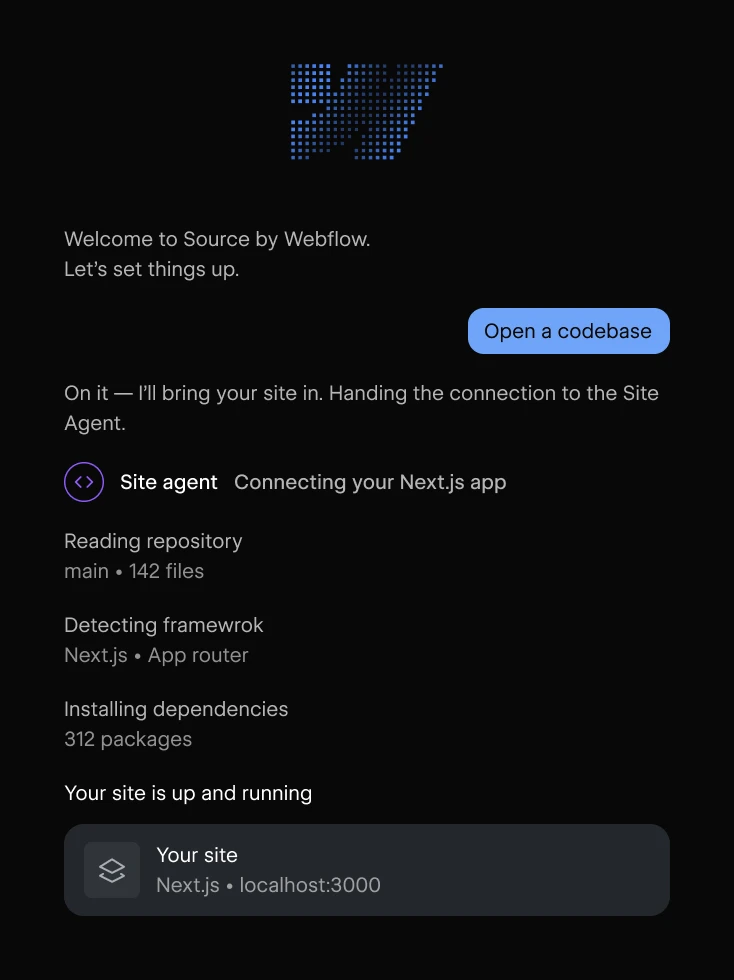
Source by Webflow unveiled at Webflow Conf 2026.
The way we build websites has changed. We no longer need to build a site block by block. AI coding agents have become really good at writing code, and the speed of iterating, improving, optimizing and launching websites has increased dramatically.
It’s kind of ironic since when I started building websites back in 1995, we had to build them in code, albeit handwritten code using BBEdit. Then things became more sophisticated, and we could use visual tools like Adobe PageMill, GoLive CyberStudio, Dreamweaver, Claris Home Page and finally iWeb from Apple. It wasn’t until 2013, when Webflow launched, that there was a tool that allowed you to build responsive websites visually. Webflow changed everything, and each year they added more and more features that made it the definitive website-building platform for us.
I became an official Webflow partner in 2021, and since then we’ve chosen to only build websites using Webflow. Having tried many, many CMS platforms over the years, Webflow became our go-to tool, and the results were amazing! We had one of our best years as an agency in 2021.
2021 was also the first time I attended Webflow Conf, known as No-Code Conf then. As my badge states, “I am a Webflow partner specializing in building websites and apps for clients using no-code tools.” I also started using Bubble to build apps, and no-code tools were all the rage! The tradeoff was that the Bubble or Webflow project became the source of truth vs. the actual codebase. These no-code tools gave us an incredible visual development environment and allowed anyone to be a developer, but they also gave us less direct control and were less portable.

My attendee profile from No-Code Conf 2021. Five years later, I’m excited about working directly with code again.
Now AI coding agents have become so good at writing code that we don’t need the abstraction layer we had before, and we can directly manipulate the code, which often increases the performance of the websites and apps we build. We can also choose any host, and we aren’t locked into any specific platform. These are exactly the reasons I built the new MIS website in code using the Astro framework and hosted it on Cloudflare (for free!). “Astro is a web framework that takes the best from the early internet (think HTML and CSS) and puts it to work in a next-gen architecture to make every Astro site, and the whole web, faster.”
So with this background, during the Webflow Conf keynote in Boston last week, Ben Haefele introduced Source, which is exactly the tool I didn’t know I was looking for! Source is currently in a limited research preview. The current visual Webflow Designer is not going away; this is a new tool, not a replacement.
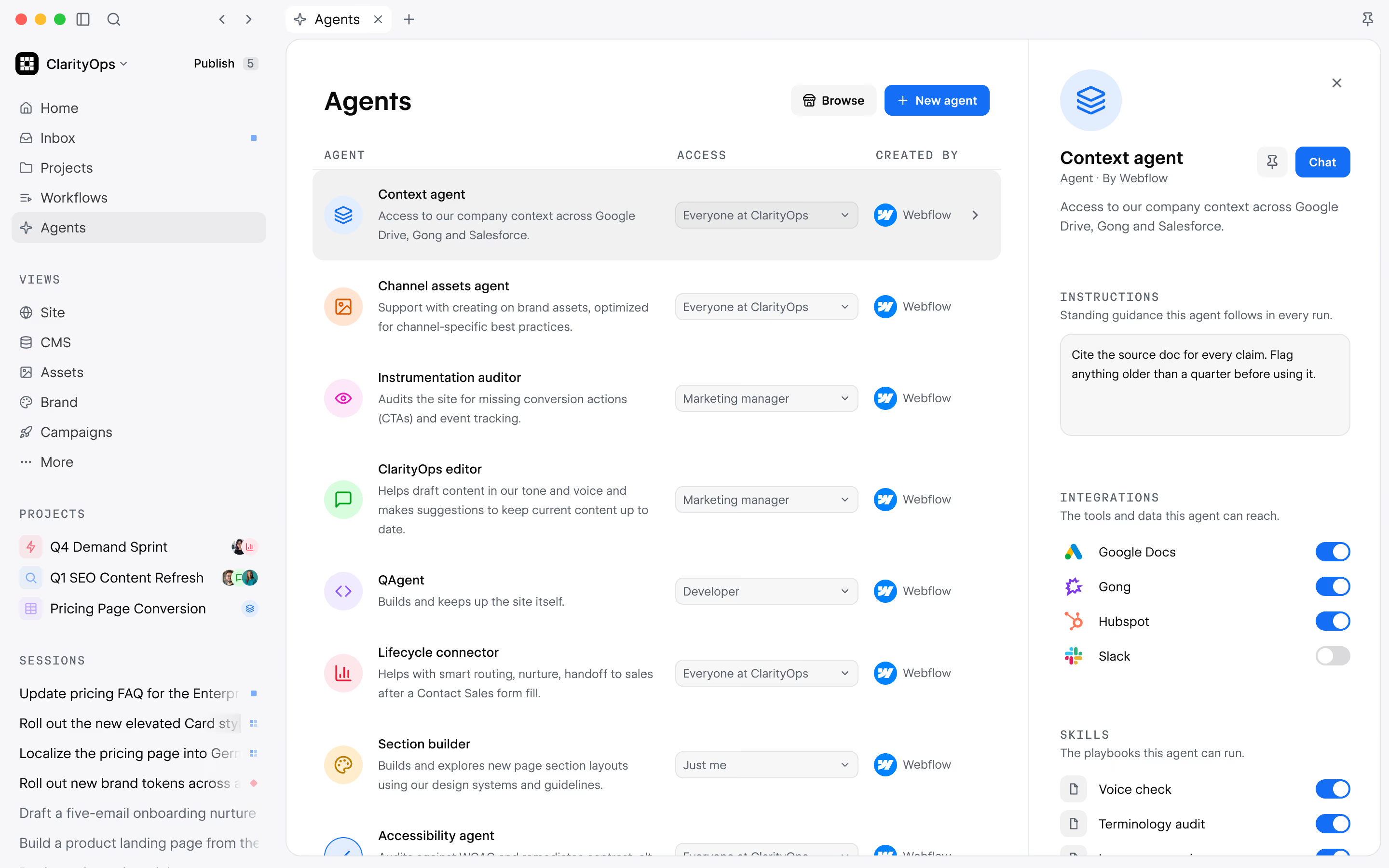
Source opens your existing codebase and lets developers, teams, and AI agents work from the same source of truth.
Later that evening at the AfterFlow party, I had a chance to talk with Webflow co-founder Sergei Magdalin about Source. He emphasized that they want Source to be built around open technologies.

Talking Source with Webflow co-founder Sergei Magdalin at the AfterFlow party.
Why Source feels different from other AI coding tools
To me, what makes Source stand out from other agentic coding tools such as Cursor, Claude Code, and Codex is its scope. Those tools are primarily centered on helping developers understand, write, and change code. Source is being designed as a shared environment for the work that continues after a website launches: managing, monitoring, optimizing, and marketing it.
A good example is the Inbox. Agents can work in the background and bring updates, recommendations, and work that needs approval into one place. Notifications from agents and comments from team members become part of the same workflow instead of being scattered across separate tools.
During the keynote, Webflow also showed built-in Views for Inbox, Campaigns, Brand, CMS, and Assets. Campaigns was presented as a place to manage paid advertising, Brand holds the guidelines agents should follow, CMS is where dynamic content can be managed, and Assets keeps the site’s media available to the team.
Beyond those built-in Views, Source is designed to let agencies and teams create custom Views around the way a client works. A small business owner could see the website, campaigns, content, and goals without needing to navigate the codebase. A developer could work directly with the code. Roles, permissions, and review paths can determine what each person or agent is allowed to change.
Source also treats agents as part of that shared working environment. Teams can create and customize agents for specific jobs instead of expecting one general coding assistant to handle everything. Examples include an Accessibility Agent, a Section Builder, a Brand Builder, and a QA Agent.
For me personally, I am looking forward to using Source to manage the new MIS website and create a View focused on whether the site is reaching its intended audience. But I am even more excited about what Source could mean for the websites we build and manage for clients. If it allows us to keep the flexibility of a codebase while giving clients the visual editing and content-management experience I’ve always loved about Webflow, along with collaboration and custom Views tailored to their work, that’s pretty close to my ideal way of building websites.
So in short:
- 1995: I was writing HTML by hand in BBEdit.
- 2021: The rise of “no-code tools.”
- 2026: I am excited about working with code again.
Except now AI agents are writing much of the code instead of having to write all the code by hand.
Want a second opinion?
We have been building websites in Albuquerque since 1995. Book a free consultation and we will tell you honestly what would help, including when the answer is that you do not need us.
More from the blog
How to Choose an SEO Company in Albuquerque
What competent SEO work looks like, what to ask before hiring anyone, and how local search in Albuquerque differs from ordinary organic search.
ReadWhat SEO Services Actually Include
A practical breakdown of technical SEO, content, local search, authority, and reporting, including which parts a small business can reasonably handle itself.
ReadWhat Realtors Actually Need From a Website
A practical guide to IDX listings, lead capture, neighborhood content, and the decisions that make an independent real estate website useful.
ReadLet’s talk about your project.
No pressure. Clear recommendations. 31 years of seeing what works.